Product Page Optimization: The Complete Guide

Product page optimization means improving the page so more visitors decide to buy. The elements that matter most, roughly in order: clear, zoomable images; a visible, obvious add-to-cart; genuine reviews placed near the top; a benefit-led description; and trust signals like ratings, returns, and secure payment. Get the buy box and the trust layer right, and conversion follows.
Why Is My Mobile Conversion Rate So Low?
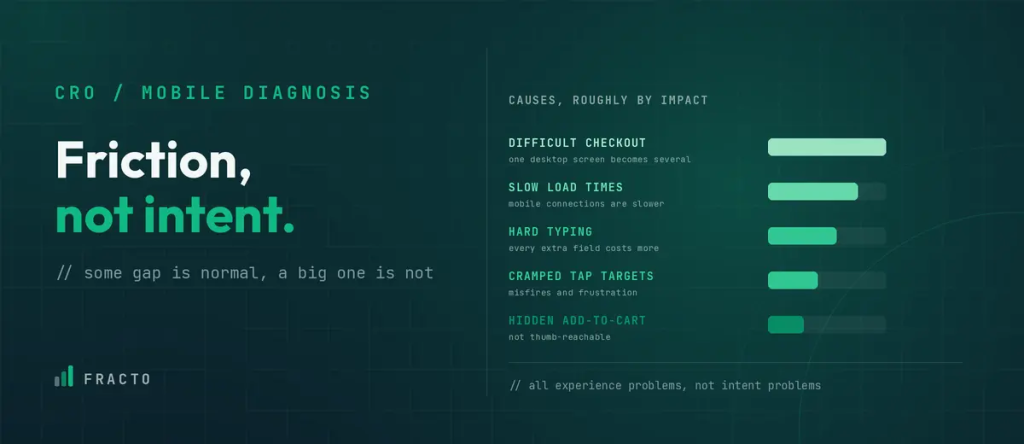
Your mobile conversion rate is probably low because of friction, not weak intent: a hard-to-complete checkout, slow load times, and cramped tap targets on a small screen. Some gap versus desktop is normal (mobile converts lower everywhere), but a large gap points to fixable problems, most often in mobile checkout.
Mobile Checkout Best Practices for Ecommerce

The best mobile checkout practices all reduce typing and friction on a small screen: offer express and wallet payments (Apple Pay, Google Pay, Shop Pay), enable guest checkout, cut form fields to the minimum, use autofill and correct keyboards, and show costs early. Mobile checkout is where the most mobile sales are lost.
Do Free Shipping Thresholds Actually Work
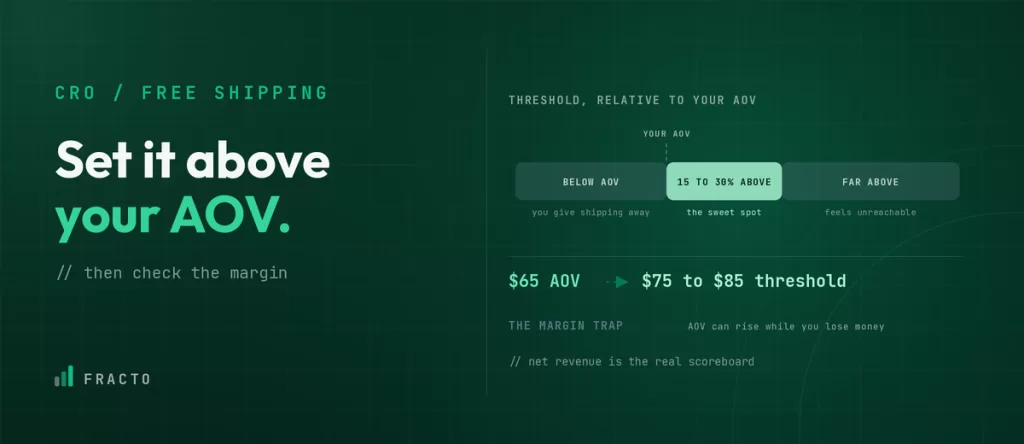
Free shipping thresholds do work for raising average order value when set correctly, above your current AOV, so shoppers add an item to qualify. But they can lose money if set too high (shoppers abandon) or too low (you give away shipping). The right threshold is a margin calculation, not a guess, and worth testing.
Upselling vs Cross-Selling: What Works in Ecommerce?
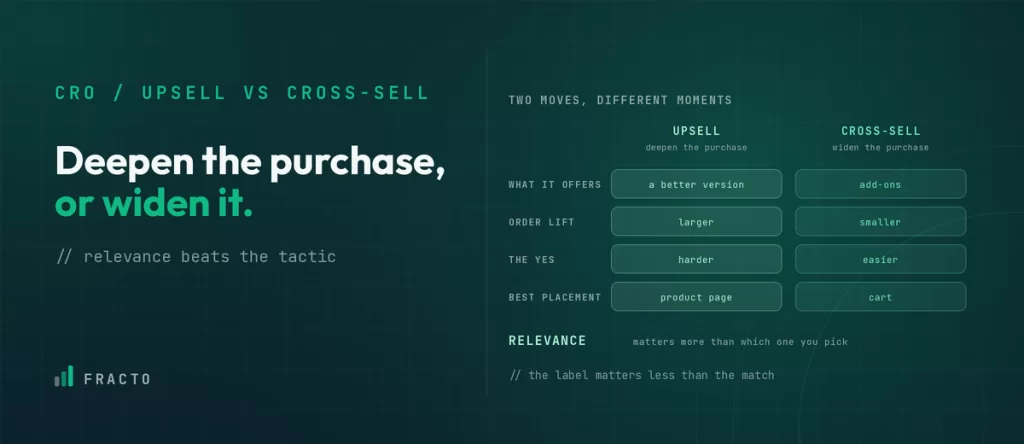
Upselling offers a better or larger version of what a shopper is buying; cross-selling offers complementary products that go with it. Both raise average order value, but they work in different moments: upsells at the point of choosing, cross-sells at the cart and after purchase. Relevance matters more than which one you pick.
How to Increase Average Order Value on Shopify
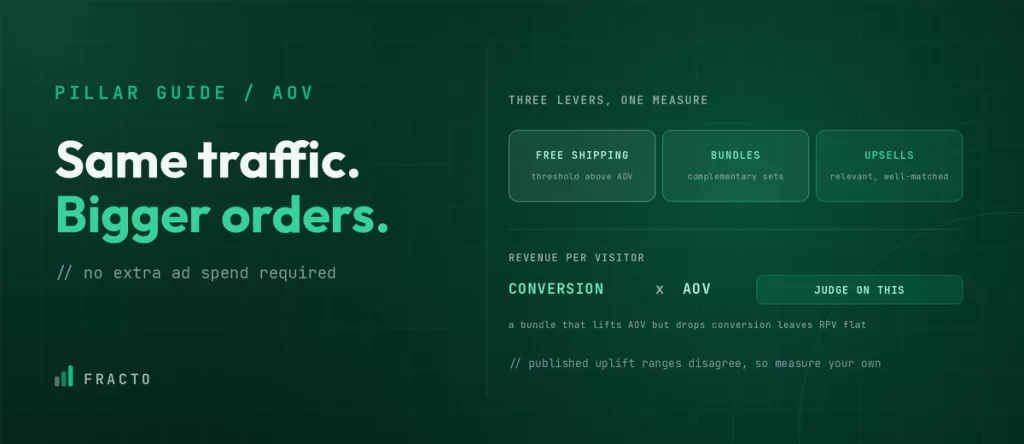
To increase average order value on Shopify, get each customer to spend more per order using a few proven levers: a free shipping threshold set above your current AOV, product bundles, and relevant upsells and cross-sells. AOV is total revenue divided by orders, so raising it grows revenue from the traffic you already have, no extra ad spend required.
What Should You A/B Test First on a Shopify Store?

Test where your funnel actually leaks, not where it’s easy. For most Shopify stores that means checkout, product pages, and the mobile experience, in that rough order, because that’s where committed buyers are lost. Prioritize by revenue impact and by how much traffic each test needs, and start with bold changes.
How Much Traffic Do You Need for a Valid A/B Test?
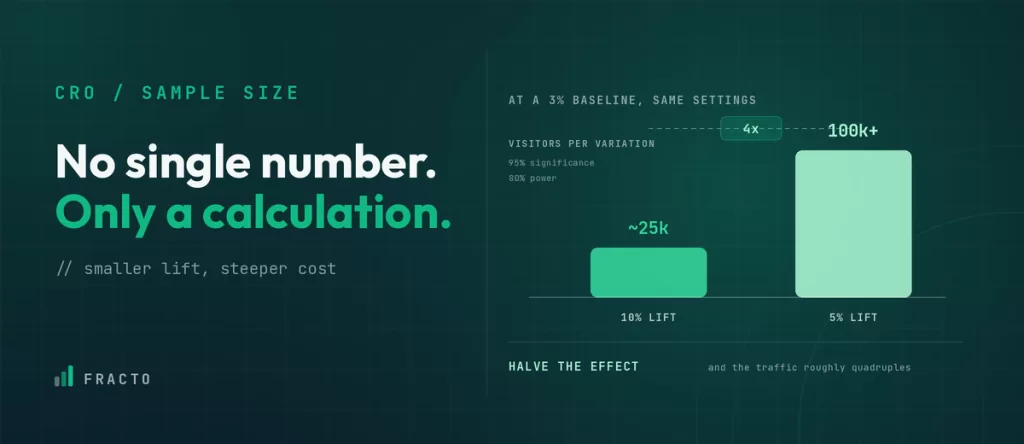
The traffic you need for a valid A/B test depends on your baseline conversion rate and the size of the lift you want to detect, not a fixed number. Detecting small improvements needs far more traffic than large ones: halving the effect you want to detect roughly quadruples the visitors required per variation.
How to Run A/B Tests on an Ecommerce Store
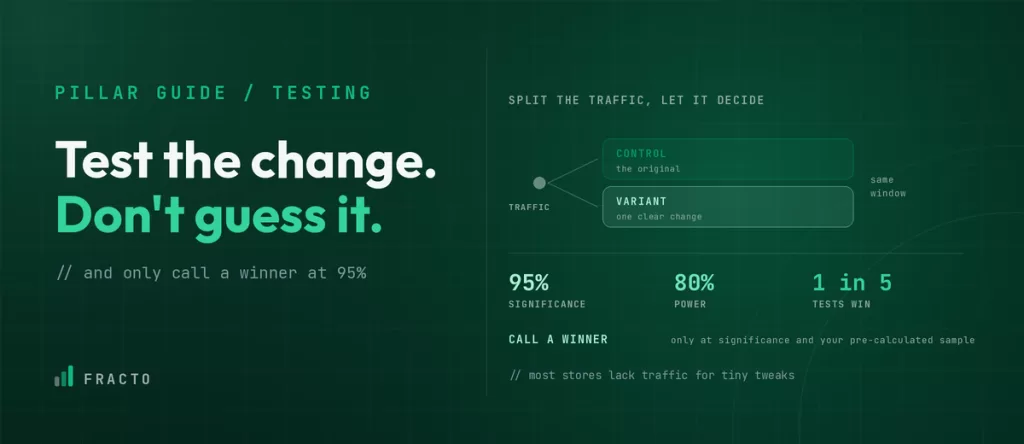
To run an A/B test on an ecommerce store, form a clear hypothesis, split traffic between the original and a variant, and measure which converts better, but only trust the result once it reaches 95% statistical significance and your pre-calculated sample size. Most stores lack the traffic for tiny tweaks, so test bold changes that can produce large, detectable lifts.
CRO Agency vs. In-House Team: Which Is Right for Your Store?
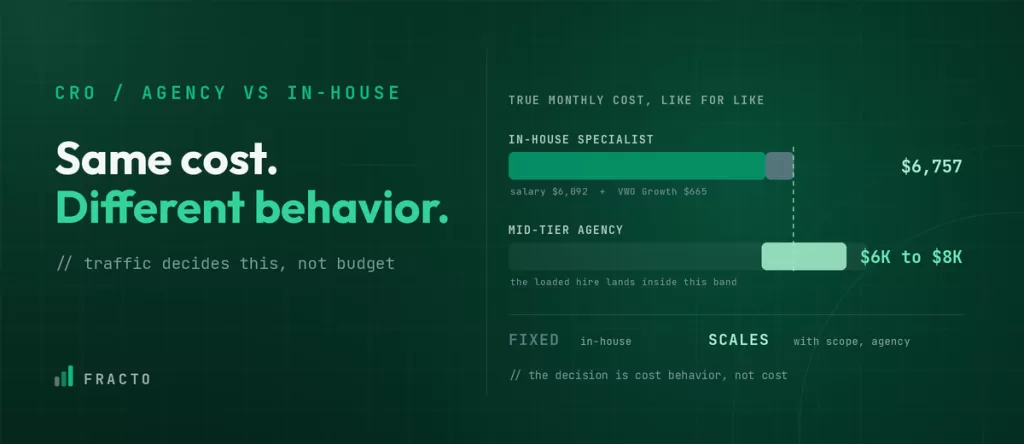
In-house works once you have enough traffic to reach statistically significant tests within weeks, and once the role has real organizational priority behind it. Below that, an agency’s cross-client pattern recognition, and its built-in accountability, substitutes for what a single hire often can’t get inside a company where CRO isn’t clearly anyone’s job.