How Much Traffic Do You Need for a Valid A/B Test?
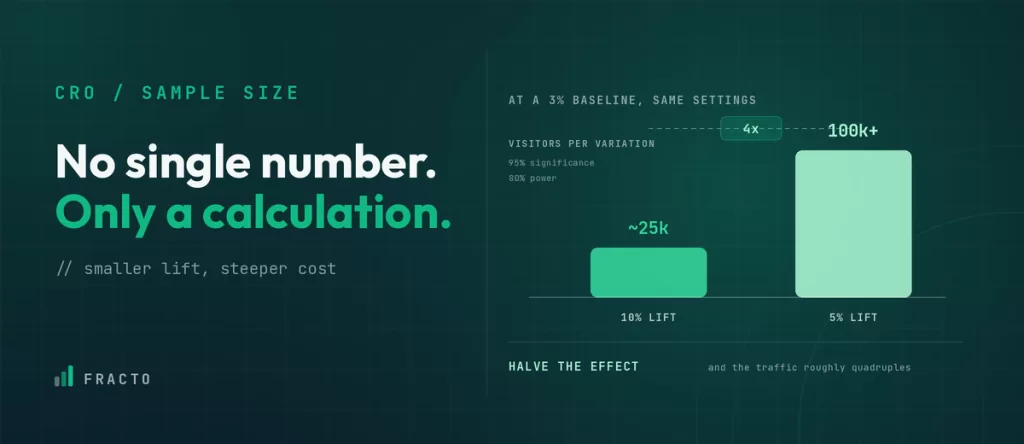
The traffic you need for a valid A/B test depends on your baseline conversion rate and the size of the lift you want to detect, not a fixed number. Detecting small improvements needs far more traffic than large ones: halving the effect you want to detect roughly quadruples the visitors required per variation.
How to Run A/B Tests on an Ecommerce Store
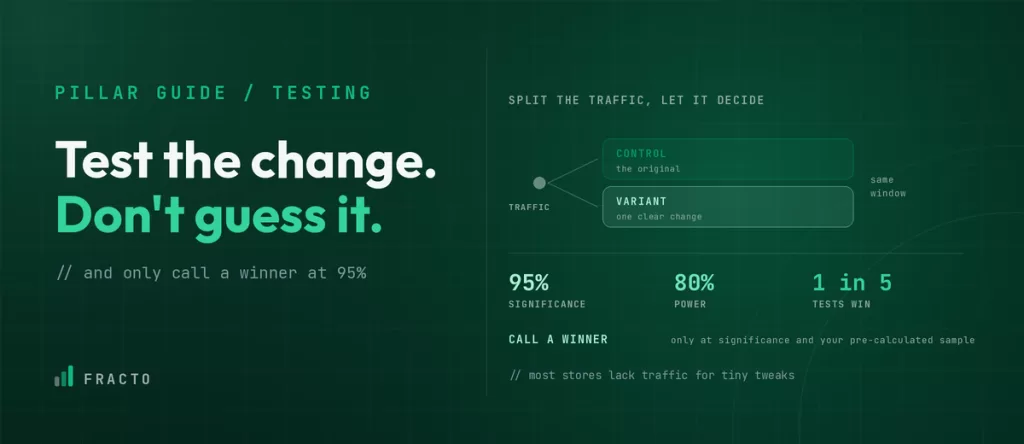
To run an A/B test on an ecommerce store, form a clear hypothesis, split traffic between the original and a variant, and measure which converts better, but only trust the result once it reaches 95% statistical significance and your pre-calculated sample size. Most stores lack the traffic for tiny tweaks, so test bold changes that can produce large, detectable lifts.
CRO Agency vs. In-House Team: Which Is Right for Your Store?
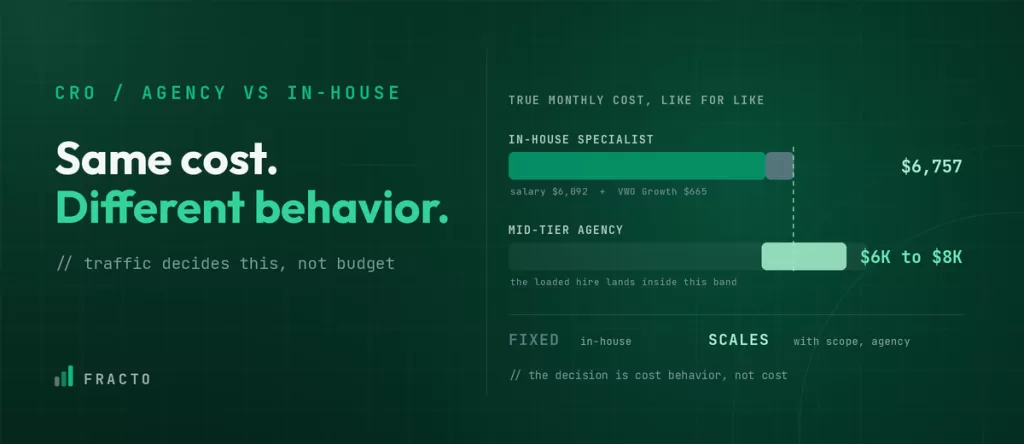
In-house works once you have enough traffic to reach statistically significant tests within weeks, and once the role has real organizational priority behind it. Below that, an agency’s cross-client pattern recognition, and its built-in accountability, substitutes for what a single hire often can’t get inside a company where CRO isn’t clearly anyone’s job.
How to Choose the Best CRO Agency for Your Ecommerce Store
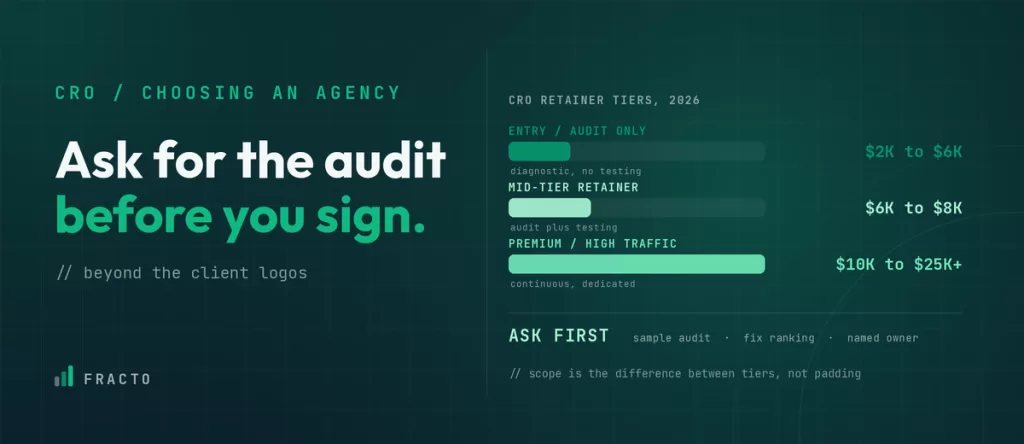
Ask for a real sample audit, check how they prioritize fixes by impact versus effort, and confirm they measure revenue per visitor, not just raw conversion rate. Expect pricing anywhere from $2,000 to $25,000+ a month depending on scope, with most mid-tier engagements landing around $6,000 to $8,000.
What Is Ecommerce Conversion Rate Optimization? The Complete Guide
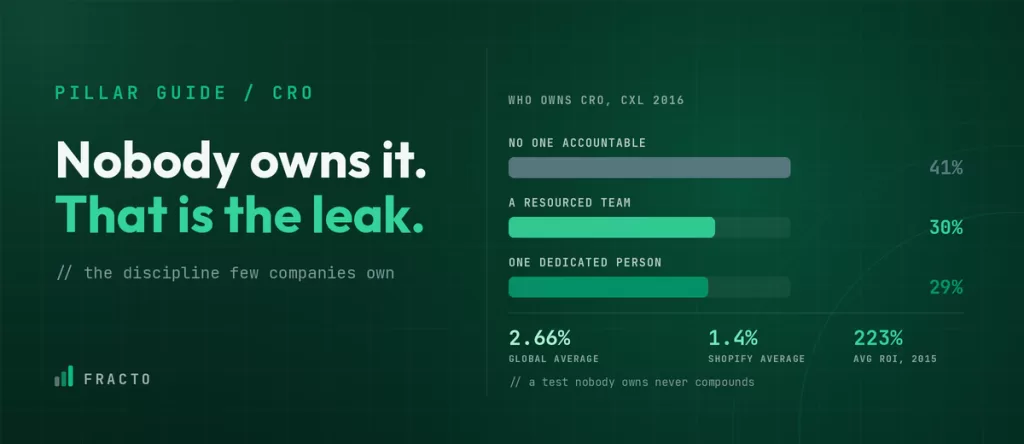
Conversion rate optimization is the structured process of turning more of your existing visitors into buyers, without spending more to acquire them. The global average sits at 2.66%, so most stores have real room to improve. The most common reason CRO programs stall isn’t technical, it’s that nobody is clearly accountable for the work.
A Shopify Checkout Optimization Framework
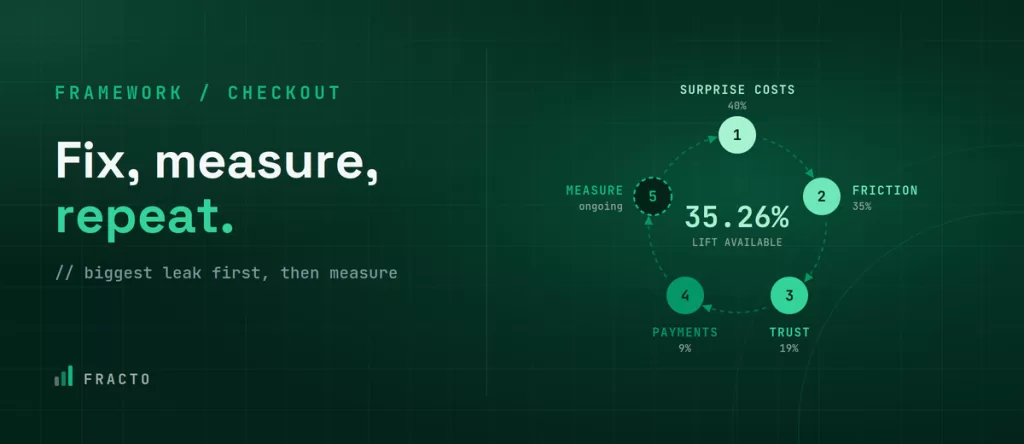
To fix abandoned checkouts on Shopify, work through five steps in order: remove surprise costs, cut checkout friction, add trust signals, expand payment options, then measure and iterate. Tackle them in priority order, cost transparency and friction deliver the biggest gains, so they come first.
Should You Improve Conversion or Increase Ad Spend First?
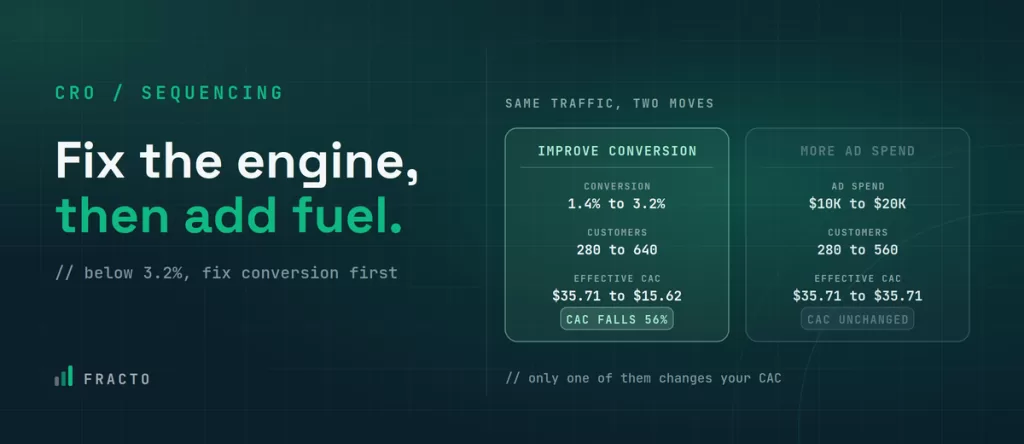
For most DTC brands, improve conversion first. Below Littledata’s 3.2% top-20% threshold, a conversion fix lowers your effective CAC and compounds on every future visitor, while more spend at the same rate just buys more of the same loss. Scale spend once you are above 3.2% with a healthy LTV:CAC. The exception is traffic: if you cannot run a test, get traffic first.
Shopify CRO Checklist: Fixing Low Conversions
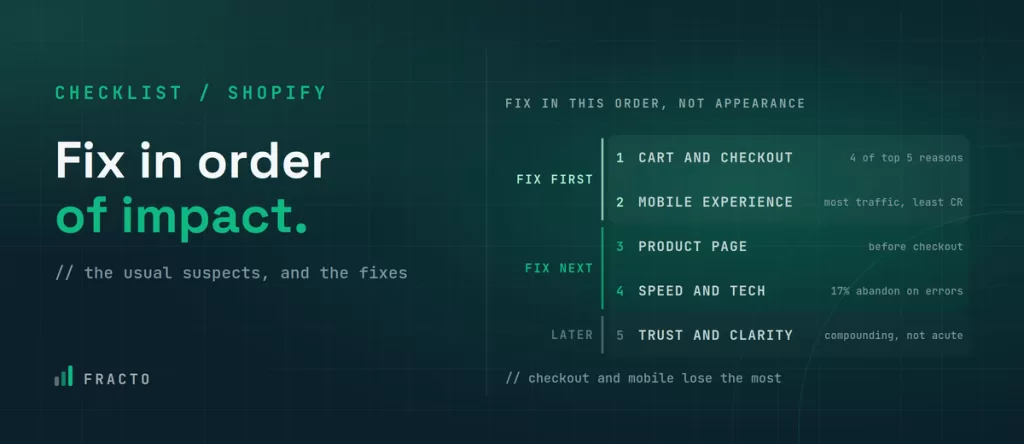
Low Shopify conversion usually comes down to a short list of fixable issues: a slow or confusing product page, hidden costs or forced accounts at checkout, a clunky mobile experience, slow load times, and missing trust signals. Work through them in order of impact, starting with checkout and mobile, where most sales are lost.
How Improving Conversion Rate Reduces CAC
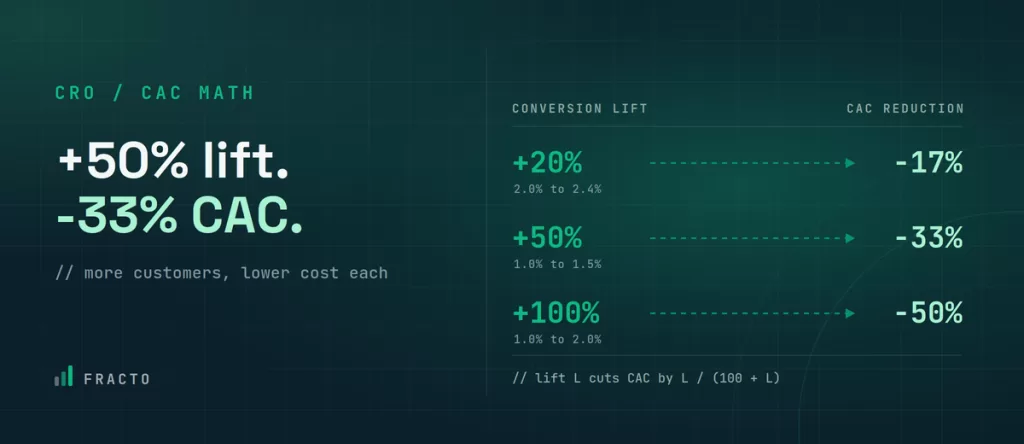
Improving conversion rate reduces CAC because effective CAC is ad spend divided by customers acquired. At fixed spend, more conversions means more customers, so the cost of each one falls in proportion. A 50% lift in conversion cuts CAC by about a third; doubling it halves CAC.
What Is a Good LTV:CAC Ratio for Ecommerce?
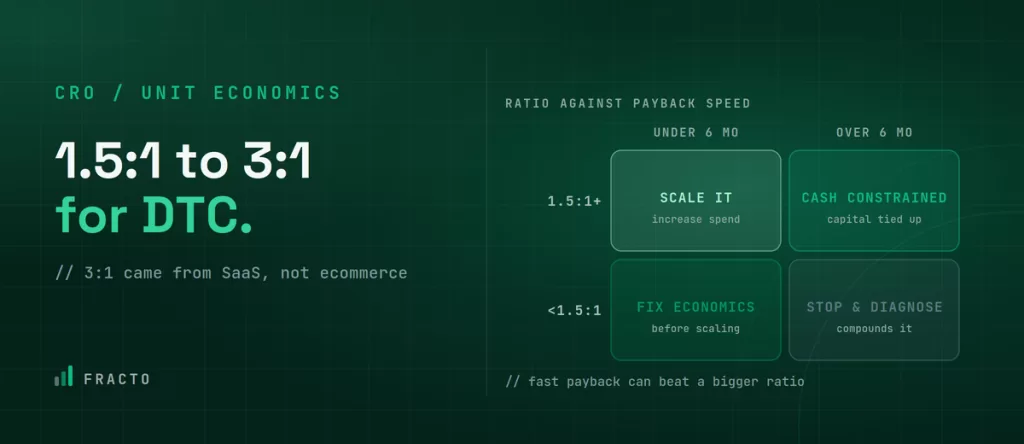
For DTC ecommerce, 1.5:1 to 3:1 is the healthy band on 2026 benchmarks, because margins are lower than software. Below 1:1 you are genuinely underwater; sustained above 5:1 usually means you are under-investing in growth. The famous 3:1 rule came from SaaS and sets a bar most healthy DTC brands will fail.