Cro / Ecommerce
What Deliverables to Expect from a CRO Audit
// what actually lands in your inbox

By Fracto Solutions
July 31, 2026
The short answer
A CRO audit should deliver four things: a prioritized findings report grouped by urgency, each issue documented with its business impact and a recommendation, a performance analysis across devices, and a sequenced action plan. If all you get is a generic checklist with no data from your store, it isn’t a real audit.
The word “audit” hides a lot. Two providers can both promise one and hand you completely different things, one a data-backed diagnosis you can act on, the other a five-page list of generic tips. The difference shows up in the deliverables.
For what an audit reviews and what it costs, see what a CRO audit includes. This piece is about what you receive.
What do you actually receive from a CRO audit?
Four things: a prioritized findings report, documented issues with evidence, a performance analysis, and an action plan. Together they turn “your store underperforms” into “here’s exactly what to fix, in what order, and why.”
The test of a good deliverable is simple: could you hand it to a developer and have them start work without a meeting? If the findings are specific, evidenced, and ranked, yes. If they’re vague best practices, no.
What is a prioritized findings report?
The centerpiece. A list of every issue found, grouped by how much it’s costing you and how urgently to fix it, not a flat list where a broken checkout sits next to a font tweak.
A good report classifies findings into priority tiers. Critical issues (P1) are bleeding revenue now and go first. High-priority issues (P2) matter but can follow. Medium issues (P3) are worth doing once the bigger leaks are sealed. That ranking is the most valuable part of the whole deliverable, because it tells you where to spend effort first.
- Example — prioritized findings, by tier
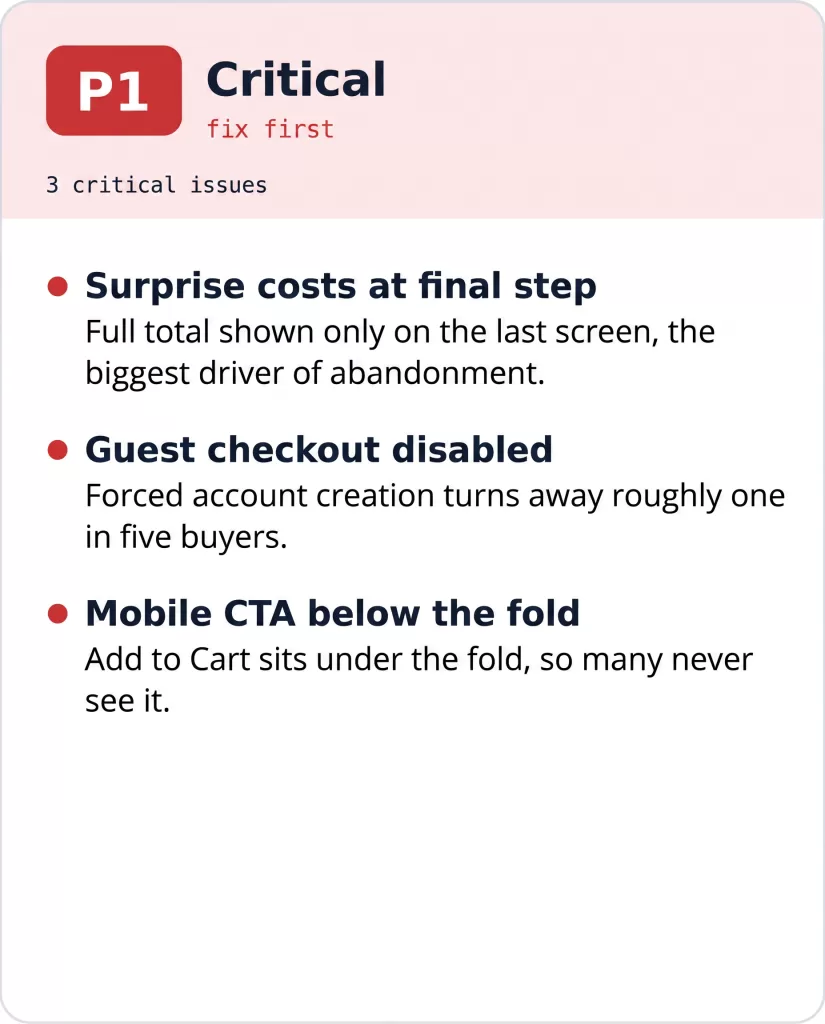
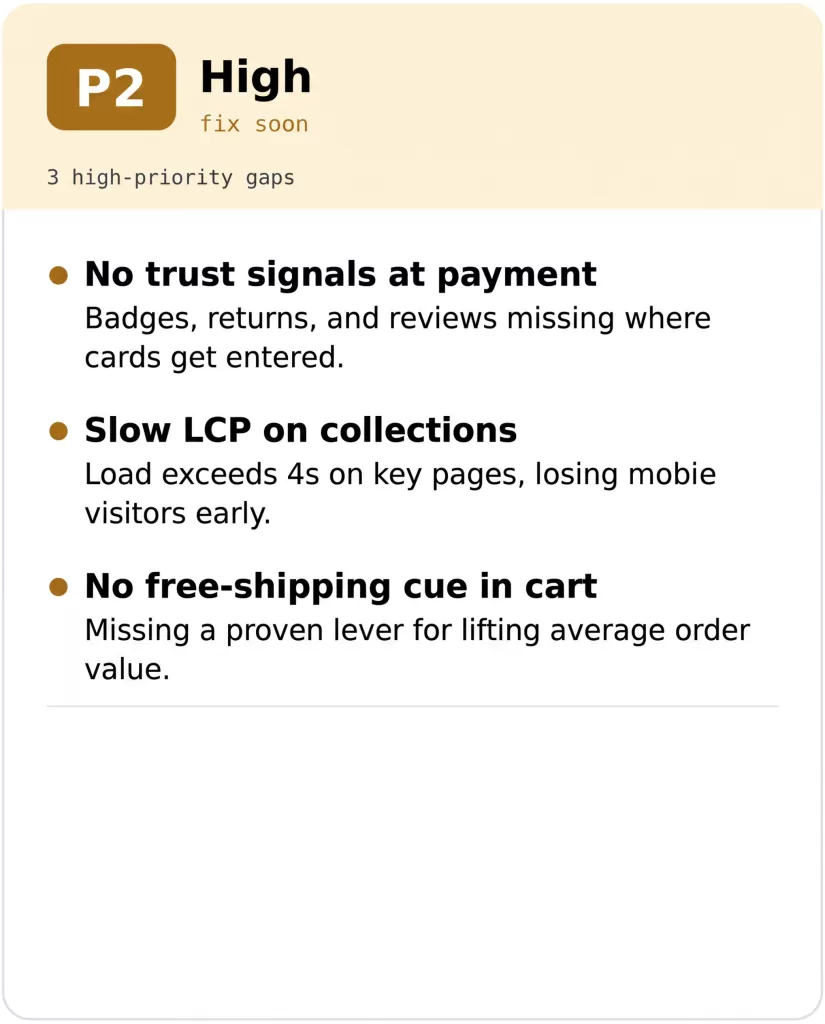
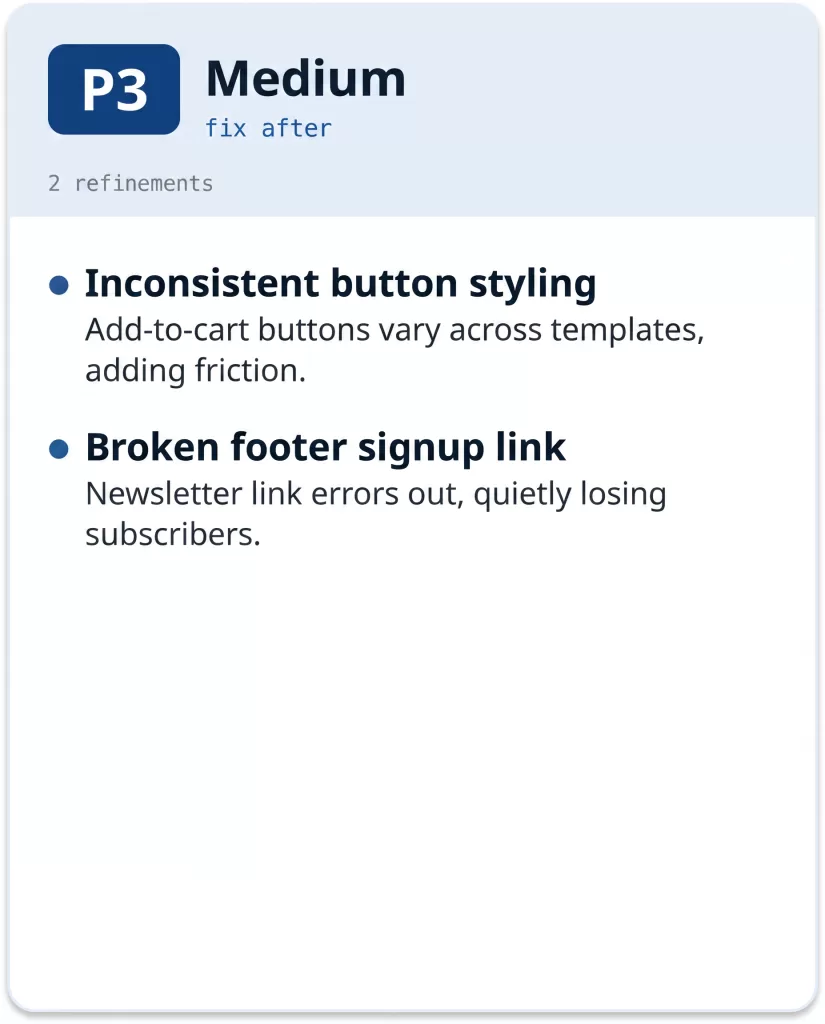
A real findings report groups issues by urgency: P1 gets fixed first, P3 waits until the bigger leaks are sealed. Illustrative example with ecommerce findings.
- Example — impact vs effort
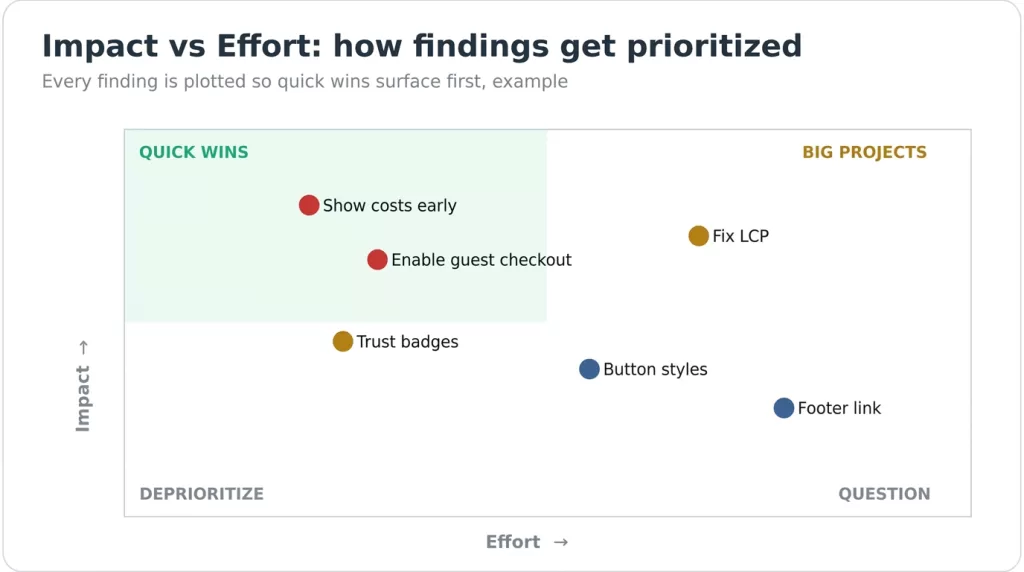
The same findings plotted by impact and effort. The green quadrant, high impact and low effort, is where a good audit tells you to start.
Without this ranking, you’re staring at a pile of “improvements” with no idea which one moves money. With it, the first week of work is obvious.
How is each finding documented?
Each issue written up the same way: what it is, what it’s costing you, what to do about it, and where it was observed. A finding without its business impact and a recommendation is just an observation.
- Description, plainly what the problem is.
- Business impact, why it matters in revenue or behaviour terms, not just "bad practice."
- Recommendation, the specific change to make, concrete enough to act on.
- Device and priority, where it shows up and how urgent it is.
- Example — a single finding, documented
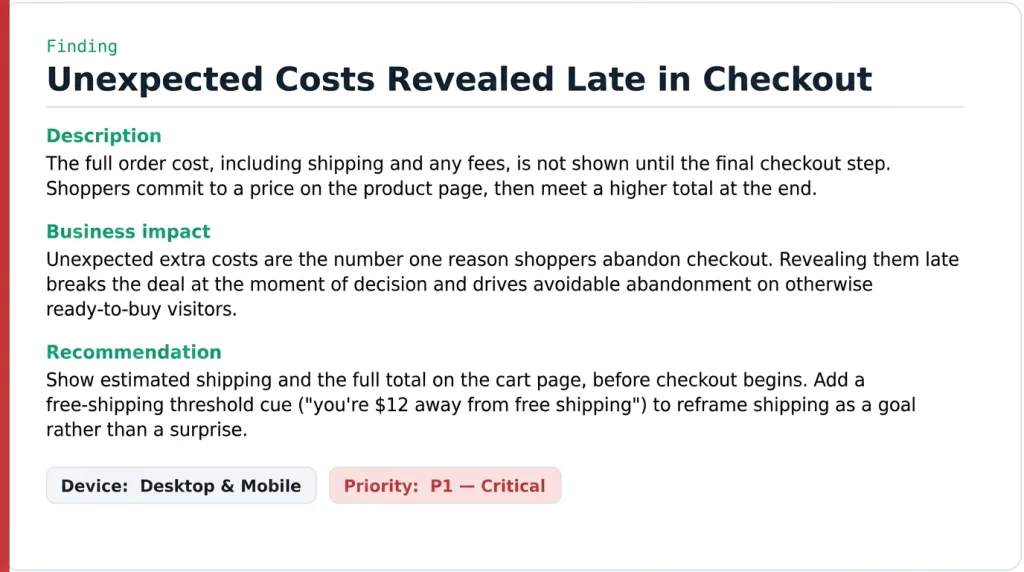
Each finding written up the same way: what it is, what it costs, what to do, and how urgent. This structure is what separates a real audit from a checklist.
That structure separates a real audit from a checklist. “Add trust badges” is a tip. “Trust signals are absent at the payment step where shoppers decide whether to enter card details; add badges, a visible return policy, and reviews here; desktop and mobile; priority P1” is a finding you can act on.
What does the performance analysis cover?
A technical performance section, because speed and stability affect conversion directly. It should measure your store across tools and devices, not a single score from one test.
Expect real measurements: Core Web Vitals, performance scores, and supporting metrics, reported separately for desktop and mobile, since mobile is usually slower and the larger share of traffic. A single desktop number hides the problem; a proper analysis shows where real visitors struggle.
- Example — performance analysis
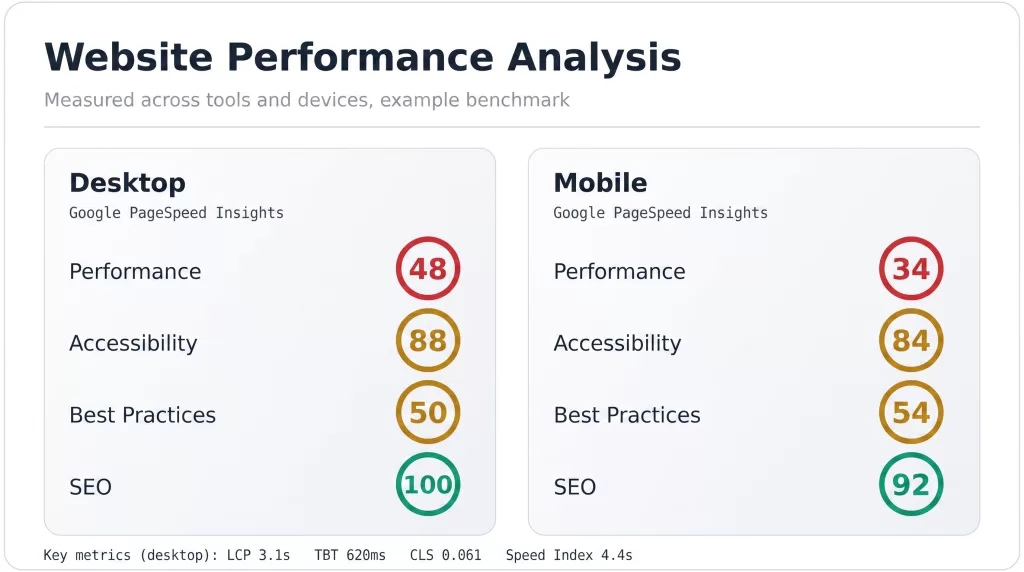
Performance measured across devices, not a single score. Mobile is usually slower and the larger share of traffic, so it’s judged separately.
A store can look fine in one test and fail real users on mobile connections. The deliverable should make that gap visible.
What should the action plan look like?
A sequenced plan, not just a list of problems. It turns the ranked findings into an order of operations: fix this first, then this, and here’s the expected effect.
- Example — sequenced action plan
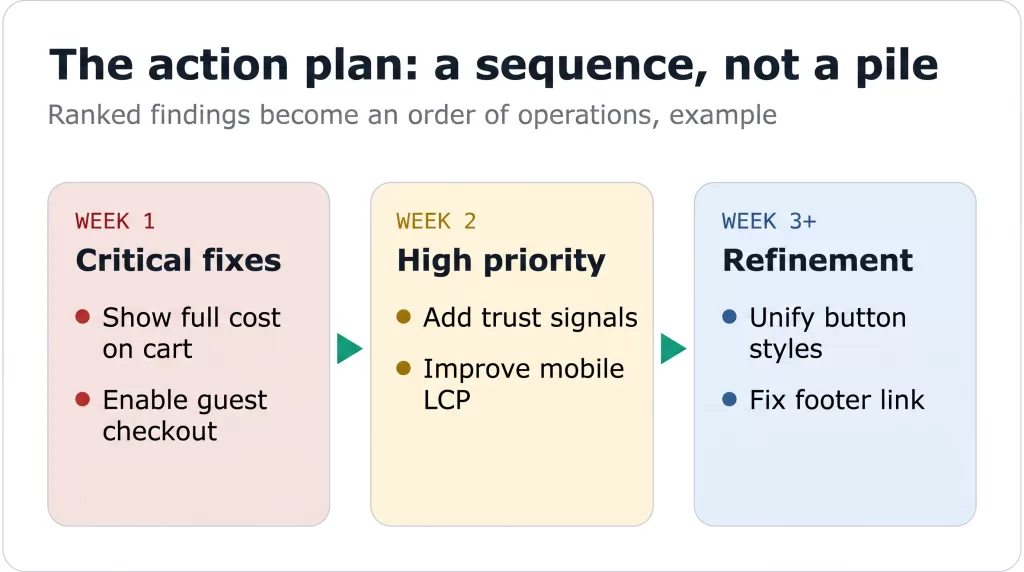
The action plan turns ranked findings into an order of operations, so you know exactly what to tackle first and why it comes before the rest.
The best action plans pair each step with a sense of impact and effort, so you can weigh quick wins against bigger projects. You should finish reading it knowing exactly what to tackle in week one, and why that comes before week two. If it stops at “here are your problems” without an order, it’s done half the job.
How do I tell a real deliverable from a generic checklist?
Look for your own data in it. A real deliverable references your funnel, your recordings, your actual pages. A generic one could apply to any store.
Three quick tests. Is it ranked by impact, or is everything equally important? Does each finding cite evidence from your store, a funnel number, a recording, a screenshot, or just assertions? Does it tell you what to do first? A deliverable that passes all three is worth paying for. One that reads like it was written before anyone looked at your store is a template, not an audit.
Our deliverable is a plan you can act on, not a PDF you file away.
Every finding is ranked by revenue impact, evidenced from your own analytics and recordings, and paired with a specific recommendation and a sequence, so you know exactly what to fix first and why.
Frequently asked questions
What format does a CRO audit come in?
Usually a written report or slide deck, sometimes with a supporting spreadsheet of findings. Format matters less than substance: what counts is whether findings are ranked, evidenced, and actionable.
How many findings should an audit include?
There’s no magic number. A focused audit surfacing ten well-evidenced, ranked issues is more useful than one listing fifty generic ones. Depth and prioritization beat volume.
Should a CRO audit include the fixes, or just the findings?
It should include specific recommendations for each finding, that’s the difference between a diagnosis and a to-do list. Implementing them is separate work, but the deliverable should tell you exactly what to change.
Does a CRO audit deliverable expire?
Its findings reflect your store at a point in time, so acting promptly matters. Once you’ve made changes, a fresh look is worth doing, though the prioritization logic stays useful well beyond the audit.
Keep reading
Sources
Deliverable structure reflects standard CRO audit practice: prioritized findings, documented issues with business impact and recommendation, performance analysis, and a sequenced action plan.