How to Promote a Referral Program
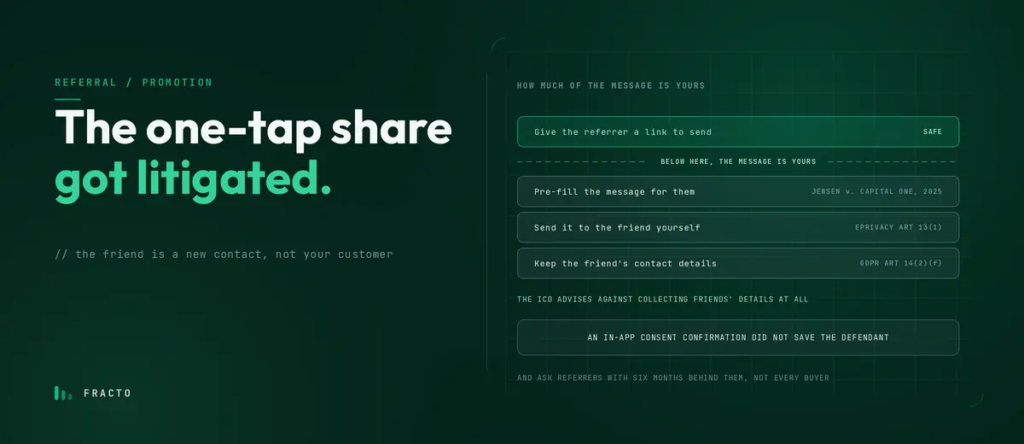
Promote a referral program by surfacing it where happy customers already are, the post-purchase flow, account area, emails, and order confirmations, and asking at peak satisfaction. Make sharing a single tap with a personal link or code, remind customers it exists, and keep advocates engaged. Visibility and ease, not reward size alone, drive participation.
How to Structure Referral Rewards
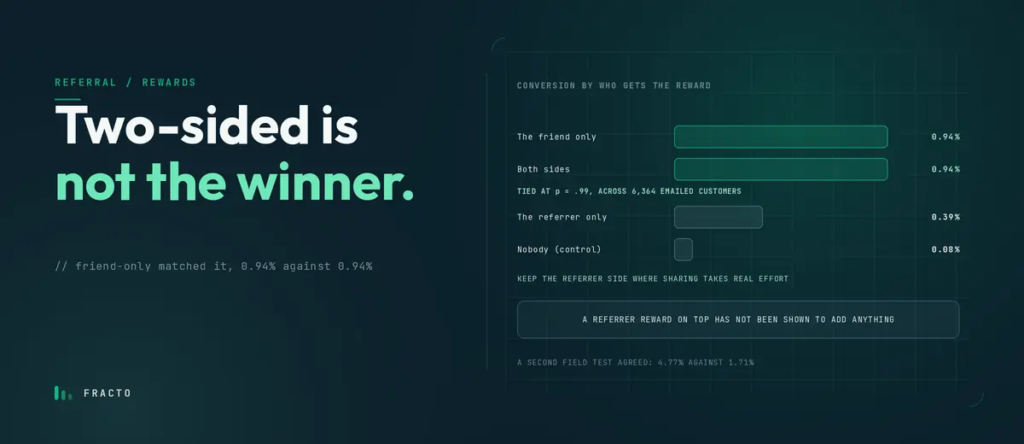
Structure referral rewards as two-sided (something for the referrer and the friend), sized to motivate without eroding margin. Store credit or a discount for both sides is the common, margin-friendly default; cash or gifts suit higher-value products. Reward only on a valid first purchase, and model the reward cost against the incremental customers it brings in.
Referral Program Strategy for Ecommerce
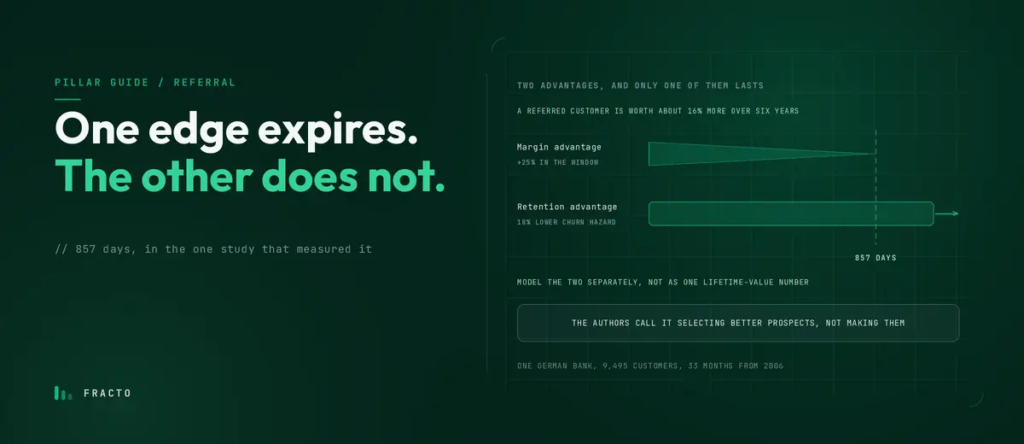
A referral program rewards existing customers for introducing new ones, turning word of mouth into a measurable, low-cost acquisition channel. It works because referred customers arrive with a trusted recommendation, so they convert and retain better. Use a two-sided reward (something for the referrer and the friend), ask happy customers at the right moments, and promote it where they’ll see it.
Loyalty Program Mistakes to Avoid
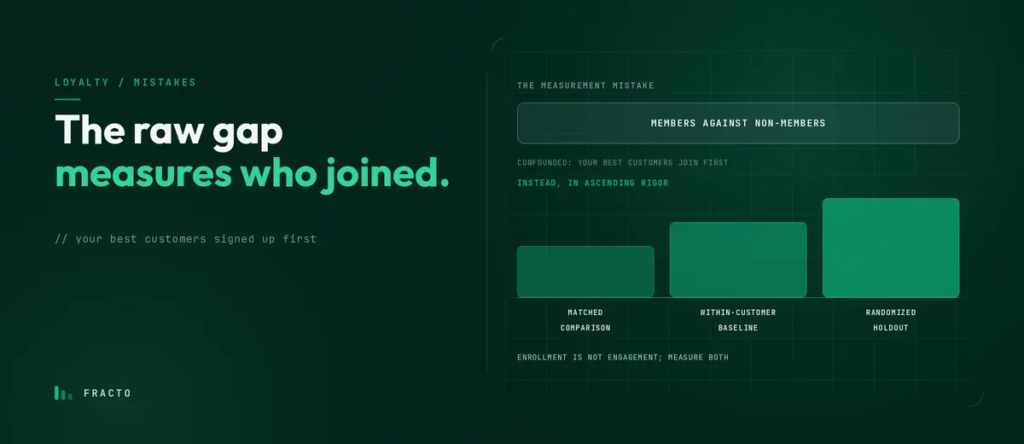
Most loyalty programs underperform for avoidable reasons: rules too complex to understand, rewards too hard to reach, margin given away for loyalty customers already had, launching with no promotion, and never measuring results. Keep it simple and attainable, model the economics, promote it, and track repeat-purchase behavior, not just sign-ups.
Points vs Tiers vs Cashback: Which Loyalty Model?
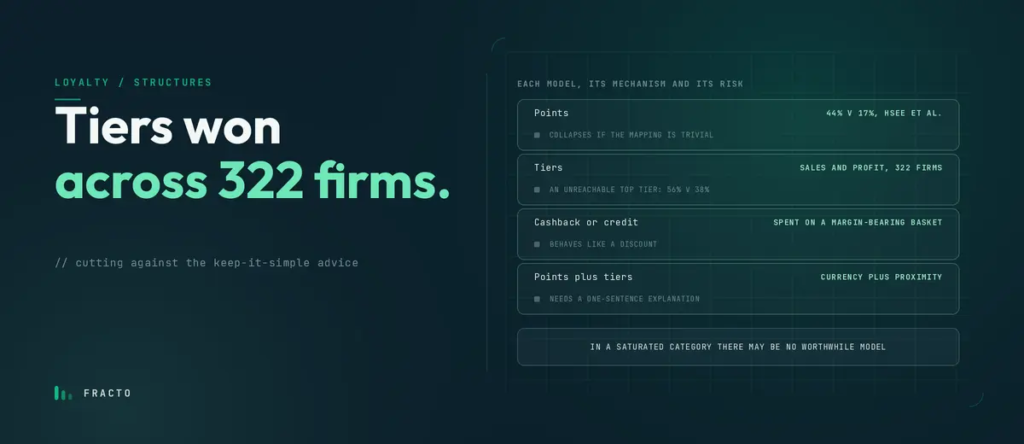
Points reward each purchase with redeemable value and suit frequent buyers; tiers create status levels with growing perks and suit aspirational brands and your best customers; cashback or store credit is simple and pushes the next purchase. Many programs blend them. Choose the structure by your purchase frequency, margins, and brand, not by what competitors use.
How to Design an Ecommerce Loyalty Program
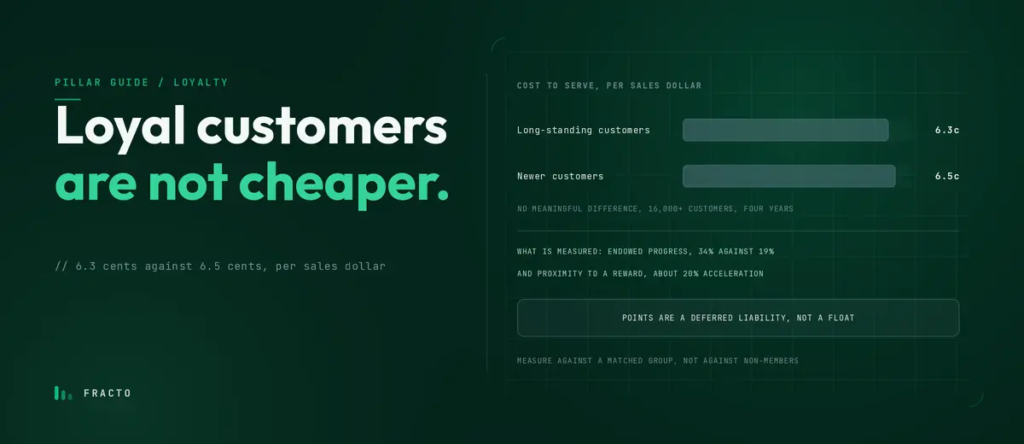
A loyalty program rewards customers for repeat purchases and engagement, turning one-time buyers into regulars. It works because repeat customers cost less to sell to and spend more over time. Design it to reward behavior you actually want, pick a structure (points, tiers, or cashback) that fits your margins and purchase frequency, and keep the rewards simple, attainable, and margin-aware.
How to Reduce Ecommerce Customer Churn
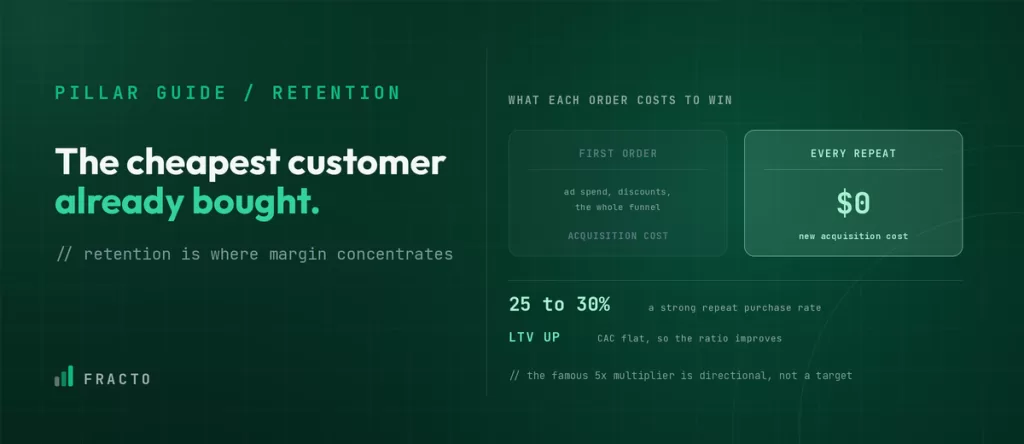
To reduce ecommerce customer churn, fix the causes that push customers away, poor post-purchase experience, bad delivery, irrelevant communication, and re-engage customers before they lapse. Spot at-risk customers by watching time since last order against your normal purchase cycle, then win them back with timely, relevant outreach rather than blanket discounts.
What Is a Good Repeat Purchase Rate for Ecommerce?
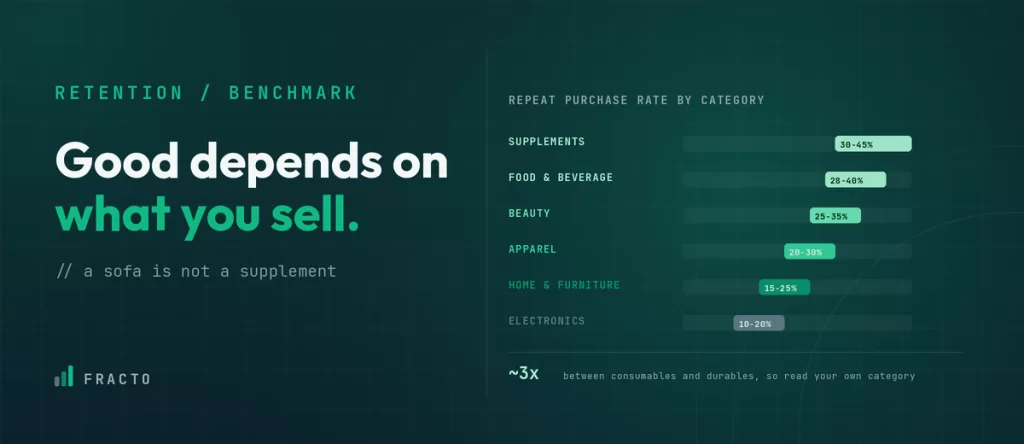
A good repeat purchase rate for ecommerce is around 25 to 30 percent, with 15 to 30 percent being the typical range. But it varies enormously by category: consumables like supplements and food reach 30 to 45 percent, while durables like electronics sit at 10 to 20 percent. Benchmark against your own category.
How to Improve Ecommerce Customer Retention
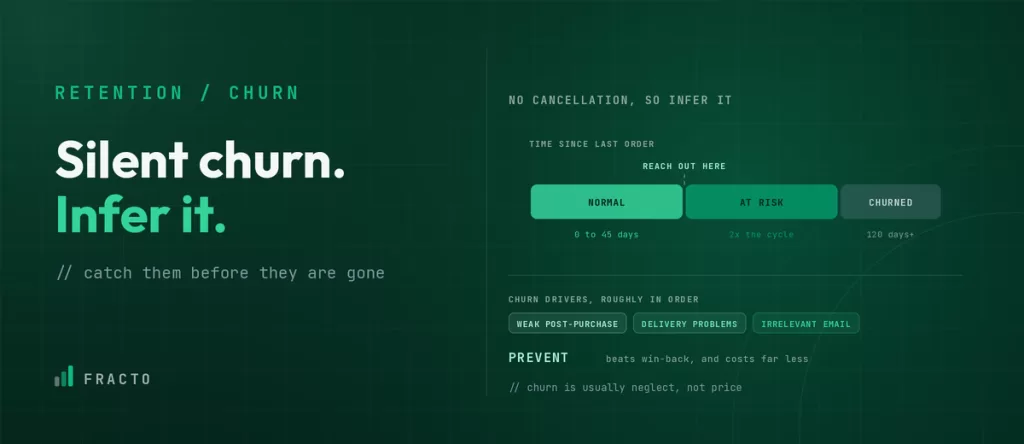
To improve ecommerce customer retention, focus on the experience after the first purchase: reliable delivery, a strong post-purchase sequence, timely replenishment prompts, and genuine reasons to come back. Retention is where profit concentrates, because selling again to an existing customer costs far less than acquiring a new one. Track repeat purchase rate, and benchmark it against your own category.